daughters · cooking · health
The Fish in the Freezer
Yesterday was a long-weekend Monday and the girls found a fish in the freezer that I don't know how to cook. Renata wanted to know why it was there.
The fish had been in the freezer for five days, lying between a bag of peas and the ice trays, wrapped in plastic that said "tilapia fillet, 800 g" and, underneath in smaller letters, "product of Vietnam." I bought it last Thursday, the night of the lab results, along with the oatmeal and the nopales. I don't know how to cook fish. In my house growing up, fish was something you ate during Lent and at the beach, and on both occasions somebody else made it.
On Sunday afternoon the girls arrived, with their backpacks and a bag of dirty laundry their mom hadn't gotten to. Monday there was no school and no office, for the Revolution Day holiday, and in this house that means one thing: nobody gets up before ten, and at a quarter past ten somebody opens the fridge asking what there is for breakfast.
Inventory
It was Ximena. She opened the fridge, the fridge sighed, and she stood there looking in with the face of someone who walks into a room where the furniture has been moved. "Why are there nopales?" she asked. Then she opened the freezer, where there's usually cookies-and-cream ice cream, and found the tilapia. She pulled it out with two fingers, the way you'd pull something out of a drain, and set it on the kitchen table. "Dad. Why is there a fish?"
Renata came down right then, in her pajamas, her hair tied up any old way. She saw the fish on the table, saw the oatmeal on the shelf where the chocolate cereal used to be, saw the ground flaxseed Lupe had left, and went quiet. Renata is sixteen and adds things up faster than I do. Not numbers. The other things.
"Are you sick?" she said.
Just like that, no warm-up. I was making coffee and I took longer than necessary to pour in the water. I had meant to tell them, of course. I had meant to tell them properly, in a calm voice, sometime during the week, when the moment came. The moment turned out to be a public holiday at twenty past ten, with a frozen fish as a witness.
232
I told them the truth, which is shorter than it sounds. That I'd had some blood work done. That my cholesterol is high, not scary-high, but high enough to pay attention. That their aunt Lupe's is too. That the doctor will see me in December. That this is why there are nopales.
Ximena wanted the number. I said 232. "Out of what?" she asked. I said normal is under 200. She thought about it. "So you failed by 32," she said, and then, because she's thirteen and fair: "But not by much. It's like a six."
Renata didn't say anything. She sat down, picked up the tilapia package and started reading the label, the back of it, the nutrition table, as if there might be something more in there. I know that move. It's what I do when a client gives me bad news and I don't know what to say: I read whatever paper is in front of me. Then she put the package down and took out her phone.
"What are you doing?" I asked. "Looking up how to make it," she said. "You don't know, do you?" It wasn't a question.
Veracruz-style, more or less
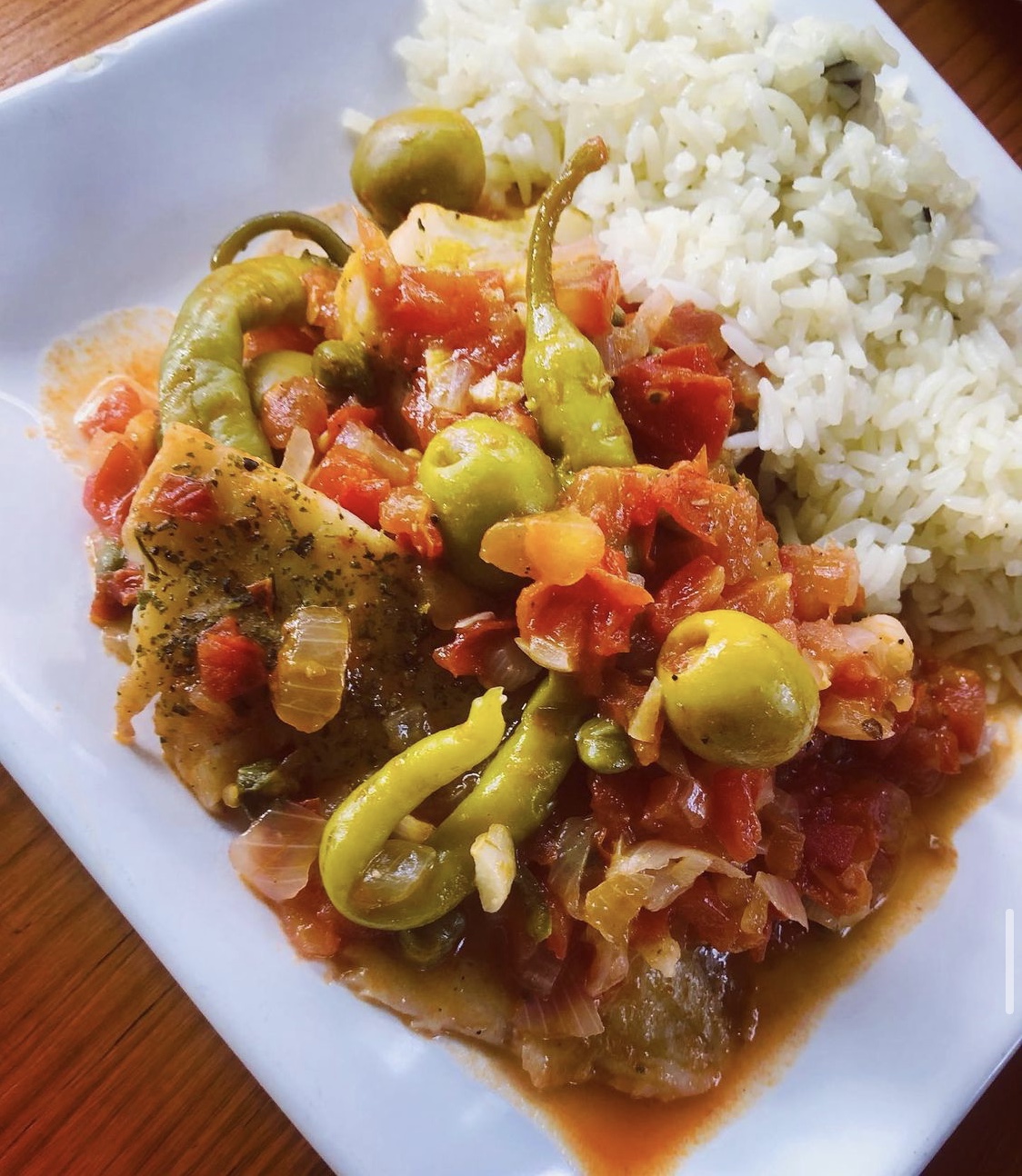
The fish thawed in the sink under running water while Renata watched three different videos and made up her mind. She picked one by a woman from Veracruz who cooked in a kitchen with green tiles and talked as if she were scolding the fish. Pescado a la veracruzana: tomato, onion, garlic, olives, capers, pickled yellow chiles. We had tomato, onion and garlic. Ximena went to don Beto's corner store for the rest and came back with olives, no capers, and a jar of yellow chiles in vinegar that weren't the ones in the video but looked like them from a distance.
I asked permission to help and it was granted with conditions. Chopping the onion, yes. Touching the pan, no. My father used to say that in a kitchen whoever holds the spoon is in charge, and yesterday the spoon was Renata's, her phone propped against Doña Chayo's jar and the woman from Veracruz paused every thirty seconds. Ximena set the table and then sat on the counter to narrate, as she always does, in a soccer commentator's voice: "And the older daughter adds the tomato... the father weeps over the onion... look out, look out, here come the olives."
There was a moment, while the tomato was melting down in the pan and the kitchen started to smell of something that wasn't bread, when I stood behind Renata and just watched. She stirred the sauce with the wooden spoon the way my mother does, from the wrist, without moving her arm. Nobody taught her that. Or somebody did, but not in this house.
The fish fell apart when she flipped it. All three fillets, in pieces. Renata said a word I pretended not to hear, and Ximena announced: "Veracruz-style fish, crumbled edition." We served it like that, in pieces, sauce on top and white rice on the side, at half past two, at the kitchen table.
A six
It was good. I won't say it was very good, because this blog promises honesty, and the honest truth is it needed salt and had too many olives. But it was good, and it tasted like real fish, and my sixteen-year-old made it on a public holiday because she found a package in the freezer and understood more than I was going to tell her.
Ximena gave it a seven. "One more than your cholesterol," she told me. Renata said next time it would be a nine, that the problem was the pan, that my pan is scratched and that's why things stick, and that we need a new one. She said it the way you say things that have already been decided.
In the afternoon, while they were watching a show in the living room, I opened the freezer for some ice. Where the tilapia had been there was now a gap the exact size of an 800-gram package, between the peas and the ice trays. And on the door, held by a pharmacy magnet, a slip of paper torn from a school notebook, in Renata's round handwriting: "Thursday: buy more fish. And capers."
Keep reading
Friday Soup
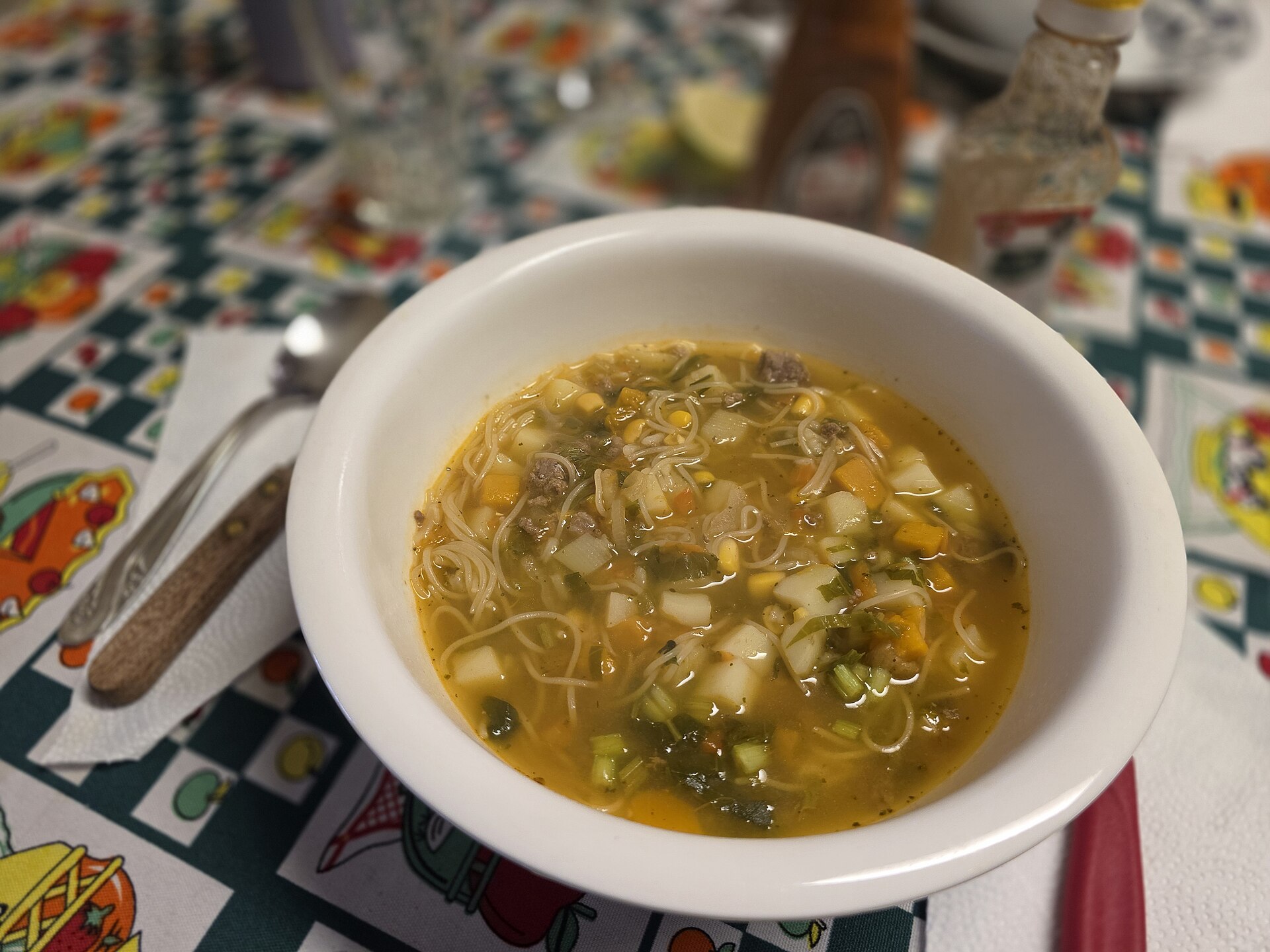
Lupe showed up with the soup she'd promised, one of my mother's plastic containers and a piece of paper folded in her back pocket. We ate at the kitchen table and compared numbers.
Fasting
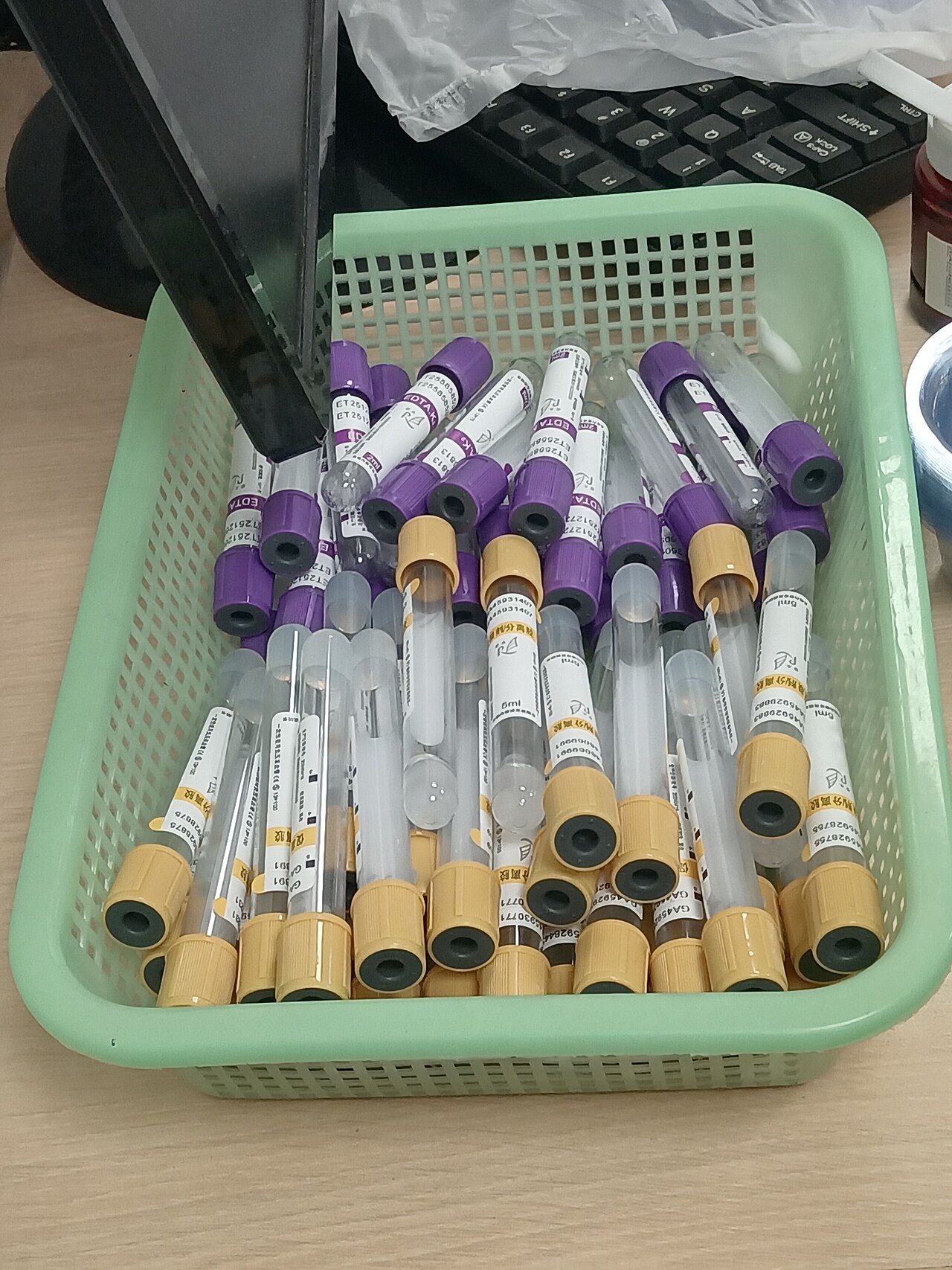
This morning I had blood drawn at seven, twelve hours without food and my yearly checkup overdue since March. The results came by email in the afternoon.
The Wednesday Set Lunch
For eleven years I've eaten lunch on Wednesdays at doña Rosa's fonda on Libertad street. Today there was a piece of cardboard taped to the door.