mom · health · park
Roll call
Today I was due to walk with Lupe in Parque Rojo at seven. On the second lap we found my mother waiting on a folding stool, looking for a boyfriend.
At five to seven it was twelve degrees Celsius and I was standing by the metro entrance at Parque Rojo, in my Sunday-ride sweatshirt, with my hands pulled into the sleeves. Lupe arrived at seven sharp, didn't say hello and kept walking. That's the deal. Whoever wants to say hello can catch up.
This is the second week of our soup agreement, if you can call it a week when we've walked two days. Nothing happened on Tuesday, except that on the third lap I asked how much was left. Lupe walks as if the bank were about to close. She pumps her elbows. She keeps count on her watch and reports it to me without being asked: "Twelve hundred." "Nineteen hundred." I add things up for a living, and I haven't managed to add up anything while walking, because adding requires air.
The lady in the brown shawl
On the second lap, Lupe slowed down. That alarmed me more than anything the lab has ever sent. "Don't look," she said. I looked.
At the edge of the path, between a juice stand and a man doing squats while holding on to a tree, a woman in her seventies was sitting on a folding stool. Brown shawl, white sneakers, dark glasses at seven on a cloudy morning, and a newspaper held open in front of her face. It was Sunday's paper.
It was the same stool that, according to her, she wasn't going to use on the pilgrimage.
We thought about going around the other way. We discussed it in low voices, like two children who've broken something. But Lupe is forty-seven and owns a stationery shop, I'm forty-four and have a legally binding electronic signature, and we decided to walk past her as naturally as could be. We didn't get three steps beyond.
"Méndez, Guadalupe," said the newspaper. "Méndez, Carlos."
My mother was a schoolteacher for thirty years. When she puts the last name first, you stop and very nearly answer "present." I think I did answer.
She lowered the paper, took off her glasses and looked at me, then at Lupe, then at me again, and then behind us, to see if anyone else was coming. No one else was. "And the gentleman?" she asked.
It turns out she'd done her research. Lupe, who used to leave the house at half past seven in flip-flops, now leaves earlier in sneakers. She eats soup. She turns down sweet bread. On Tuesdays and Thursdays she puts on earrings. To my mother there was only one explanation, and that explanation had a mustache and, with luck, a pension. Today she got up at half past five and took a taxi to meet him. She wore the glasses so we wouldn't recognize her.
Two out of two
"It's cholesterol, Mom," said Lupe. She told her just like that, standing up, no anesthetic, I suppose because it was either that or make up a boyfriend with a first and last name.
My mother said nothing for a while. Then she asked how much. Lupe said two hundred and forty-one, in August. My mother turned to me and I, after two weeks of rehearsing how not to tell her, said "two hundred and thirty-two" at the speed of someone handing in homework.
I was waiting for the scolding. We had it budgeted: a single one for the two of us, which worked out cheaper. It didn't come. My mother folded the newspaper in four, very carefully, and pointed at the iron bench next to the juice stand. "The doctor sent your father to walk," she said. "He came here. I used to sit there and count his laps."
I asked how many times he came.
"Twice," she said.
She didn't add anything. I've read my father's notebooks, where even the Sunday soda is written down, and I couldn't remember a single line that said park. Walking is free. There was nothing to enter.
Lupe stood looking at the bench. I stood looking at the juice stand, which is what I do when I don't want my sister to see my face.
My mother took an electricity bill out of her bag, turned it over, uncapped a red pen and wrote two names, one under the other, last names first. Next to them she drew two tally marks for each. "What are you doing standing there?" she said. "You have four laps to go."
We did all four. Every time we passed in front of her, she added a mark without looking up. On the last one she shouted at me to straighten my back.
At twenty to eight we put her in a taxi. Before closing the door she gave me a pat on the shoulder, which is not something she does, and I walked to the firm quite moved, standing up straight. At a quarter past nine, by the coffee machine, Malena stopped me, turned me halfway around and peeled something off the back of my sweatshirt. It was a strip of masking tape, in retired-teacher handwriting. It said: "RETURN TUESDAY."
Keep reading
The short leg
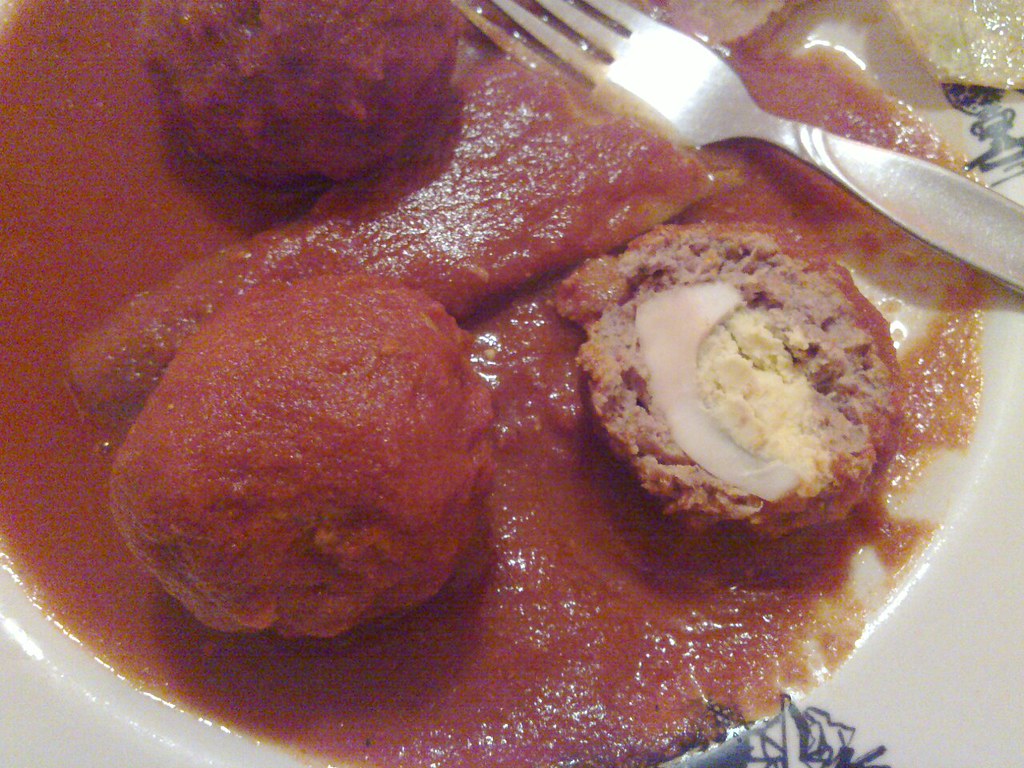
Today was my last Wednesday at Doña Rosa's lunch spot. Chela dictated the meatball recipe to me and I tried to take it down with quantities.
The Box of Ornaments
With the girls away all week, I took the Christmas box down from the closet to test the light strings. There was more inside than I went looking for.
The Eighth Inning
Sunday night the girls went back to their mom's and the house went quiet. On Monday, at coffee time, I finally asked my boss how the game ended.