mother · pilgrimage · family
Eight kilometers at my mother's pace
Yesterday I walked the Romería with my mother and Lupe, like when my dad used to take us. We never reached the Basilica, and it mattered less than I thought.

My mother called me Thursday night, from Lupe's house now, to let me know that this year she was going to the Romería. She didn't ask whether I wanted to come. She let me know, which is different. I told her I had work on Monday, and she said "well, ask for the day off," as if I were nine and this were about skipping school. On Monday at 4:40 in the morning I was parked outside my sister's house with two thermoses of coffee and a jacket I didn't need.
The Romería, for anyone not from Guadalajara, happens every October 12: the Virgin of Zapopan travels back from the Cathedral to her Basilica, and more than a million people walk with her. It's about eight kilometers. My dad took us every year, Lupe and me, until I turned fifteen and decided I was too old for it. Then I got married, then I got divorced, and in between twenty-nine years went by without my going once. I hadn't done that math until Monday.
Setting off
My mother wore brand-new white sneakers, a brown rebozo shawl, and carried a folding stool she said she wasn't going to use. Lupe had the bag: tortas, water, the inhaler, the blood pressure pills, band-aids and, for some reason, a pair of scissors. I had the thermoses. We split up the roles without discussing it, the same way we did thirty years ago, except that now Lupe was the one with the pills, not my mother.
We didn't start at the Cathedral. Lupe and I had agreed on WhatsApp, behind her back, to join the procession partway along Avenida Alcalde and spare my mother the first stretch. She figured it out the moment we got out of the car. She looked at the two of us with a face I know well and said, "You two think I'm stupid." We don't. We never have. But she didn't argue either, and that worried me more than anything else that day.
There were dancers from early on, with enormously tall feather headdresses and rattles, and the sound of their feet on the pavement gets into your chest whether you like it or not. Women selling rice atole out of pots that looked a century old.
The pace
My mother walks slowly. I'm not complaining; I'm stating a fact. She walks slowly with her eyes on the ground, because she doesn't trust this city's sidewalks, and she's right not to. Next to her, the Romería became something else. I noticed things I would have missed at my normal speed: a little boy asleep on his father's shoulders, still holding a rattle; a dog in a bandana; an old woman praying out loud, stopping to scold her grandson, then going back to praying in exactly the same tone.
Somewhere along Avenida Ávila Camacho my mother took my arm. She didn't lean on it, she just held it. We walked like that for a long while without talking. I thought about how the last person to hold my arm like that in a crowd was Ximena, when she was little, at a concert I can't even remember. The people who hold your arm keep changing, and you never notice the moment they change.
That's when she told me, without my asking, that my dad always bought tamales from the same stand, near the roundabout, and that one year when there was no money he told her they weren't going, and in the end they went anyway and bought nothing, no tamales, no atole, and that we kids never noticed. I knew which year she meant. I read it a few weeks ago in my father's notebook: one October without the "Romería" line that shows up every other year. I didn't tell her I knew. I said "Oh, really?" and let her tell me the whole thing.
Where we stopped
We never made it to the Basilica. About two kilometers out, my mother said that was far enough, and she said it calmly, no drama. Lupe unfolded the stool my mother wasn't going to use. We sat on the curb next to a stand selling little clay birds and watched the procession go by: the dancers, the brass bands, the people walking on their knees and the people in running shoes with smartwatches. When the Virgin passed in her carriage, my mother stood up from the stool, crossed herself and sat back down. The whole thing took about ten seconds. Lupe looked at me and I looked somewhere else.
I bought tamales at the first stand I found. It wasn't my dad's; I have no idea where that one was. My mother said they were good but needed salt, which is what she says about everything and which, according to Lupe, is her way of saying she liked something.
The girls are with their mom this week. At nine, Renata texted to ask whether I had really gotten up at four, with three question marks. Ximena sent a voice note asking me to buy her a noisemaker. I didn't buy her a noisemaker. I bought her a little clay bird, which is almost the same thing except it makes no noise, and which is exactly the kind of decision a thirteen-year-old never forgives.
That night, back home, I took the hardcover notebook out of the kitchen drawer, the one with the bubble in its plastic cover. I opened it to the first page and wrote, in the straightest handwriting I could manage: "Oct 12. Tamales Romería, 4. Clay bird Ximena." And I sat there looking at that line for a while, a line that says nothing about my mother holding my arm, or about those ten seconds, and says everything.
Keep reading
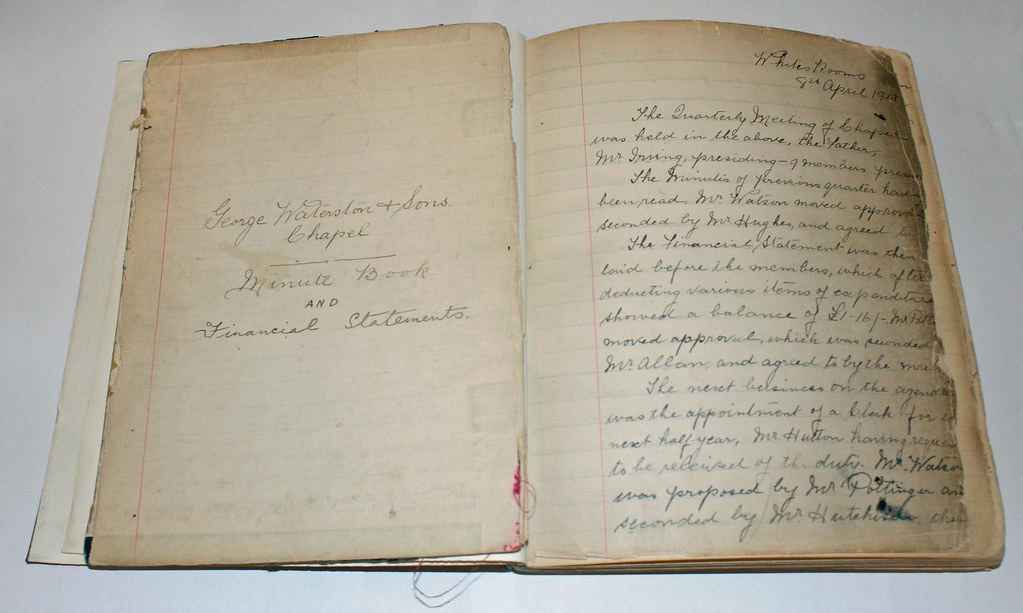
My father's notebook
My dad wrote down every household expense for thirty-six years. I read his notebooks in one night and found things no column says.
I used to be the one honking
For years I honked at Guadalajara's car-free Sundays from behind the wheel. Then I dug a forgotten bike out of the garage and the city changed speed.
Renata behind the wheel
A Sunday in an empty parking lot teaching my oldest daughter to drive, with Ximena doing commentary and me squawking like a duck.